

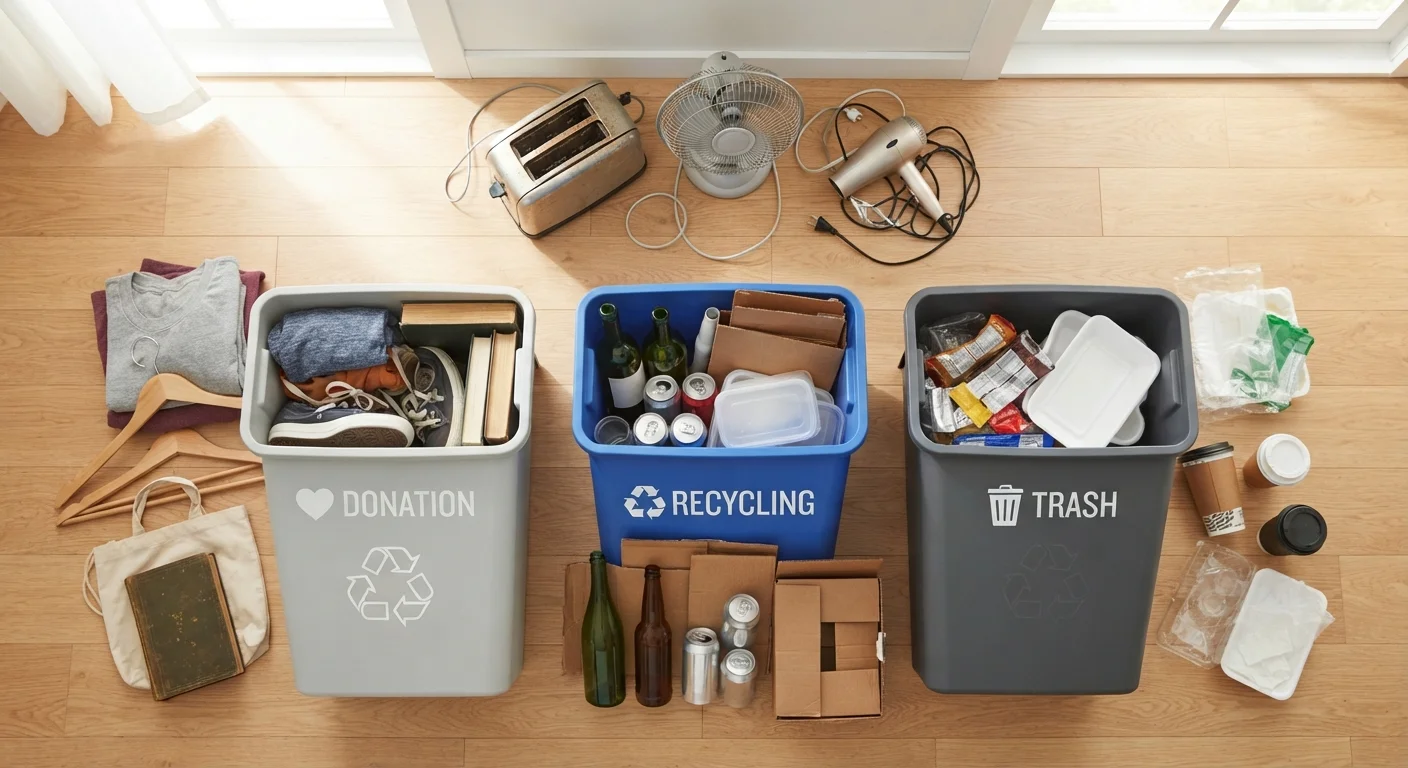
| Items accepted by most donation centers | Clean clothing, working small appliances, furniture in good repair, books, and kitchenware |
| Items donation centers typically refuse | Mattresses, car seats, recalled products, heavily stained textiles, and broken items without parts |
| Common curbside recyclables | Clean paper, cardboard, glass bottles, metal cans, and rigid plastics labeled #1 or #2 |
| Items that always need special disposal | Batteries, paint, motor oil, fluorescent bulbs, and most electronics |
| Wishful recycling risk | Placing non-recyclables in the bin can contaminate entire loads, sending them to landfill |
| Local lookup resource | Earth911.com lets you search by material and zip code for nearby recycling and disposal options |
Why the destination matters as much as the decision to let go
Getting rid of things is the easy part of decluttering. Deciding where each item actually goes takes more thought, and getting it wrong has consequences. Usable goods sent to landfill waste resources. Non-recyclables dropped in the recycling bin contaminate loads that would otherwise be processed. Hazardous materials put in regular trash can damage sanitation equipment or pollute groundwater.
If you are working through your home space by space, the room-by-room decluttering guide is a useful starting point. Once you have a pile of items to remove, this reference will help you route each one correctly.
| Items accepted by most donation centers | Clean clothing, working small appliances, furniture in good repair, books, and kitchenware |
| Items donation centers typically refuse | Mattresses, car seats, recalled products, heavily stained textiles, and broken items without parts |
| Common curbside recyclables | Clean paper, cardboard, glass bottles, metal cans, and rigid plastics labeled #1 or #2 |
| Items that always need special disposal | Batteries, paint, motor oil, fluorescent bulbs, and most electronics |
| Wishful recycling risk | Placing non-recyclables in the bin can contaminate entire loads, sending them to landfill |
| Local lookup resource | Earth911.com lets you search by material and zip code for nearby recycling and disposal options |
What can be donated
Donation makes sense when an item is clean, complete, and in working condition. Most thrift stores and community organizations accept clothing without tears or heavy staining, furniture that is structurally sound, small appliances that power on, and dishware without chips or cracks.
Before loading your car, check the receiving organization's current guidelines. Many have temporary pauses on large furniture or specific categories. Calling ahead saves time for both parties.
A few categories are almost never accepted: car seats (safety standards change and expiration dates apply), mattresses (health regulations), items under active safety recalls, and anything with missing parts that make it non-functional. When in doubt, ask rather than dropping items at the door and leaving.
Textiles that fall below donation quality are not necessarily trash. Some organizations collect worn fabric separately for industrial recycling into rags or insulation. A quick search by material and zip code on a site like Earth911.com can surface options you may not know about locally.
What belongs in recycling and what does not
Curbside recycling programs differ more than most people realize. A material accepted in one city may be rejected in the next. The general baseline for most US programs includes clean cardboard and paper, glass bottles and jars, metal cans, and rigid plastics marked #1 (PET) or #2 (HDPE). "Clean" means rinsed of food residue, not sterile.
Soft plastics, including grocery bags, bubble wrap, and plastic film packaging, go in a separate drop-off stream at many grocery stores and retailers, not in the curbside bin. Styrofoam (expanded polystyrene) has very limited recycling infrastructure and typically goes in the trash unless a specialty drop-off exists nearby.
Wishful recycling, placing items in the bin because it feels wrong to trash them, causes real problems. A greasy pizza box or a plastic bag can contaminate a load of otherwise recyclable material, and the whole batch may end up in a landfill. When you are unsure, check your local program's accepted materials list before adding an item.
Curbside recycling
A municipal program that collects recyclable materials directly from households, typically on a scheduled pickup day. Accepted materials vary by city and county.
E-waste
Electronics such as phones, computers, and televisions that require separate disposal from regular trash because they contain hazardous materials like lead and mercury.
Hazardous household waste (HHW)
Common products such as paint, pesticides, batteries, and cleaning chemicals that can harm people or the environment if disposed of improperly.
Soft plastics
Flexible plastic films and bags, including grocery bags and shrink wrap, that most curbside programs do not accept and must be dropped off at designated collection points.
Items that need a special disposal path
Some common household items belong in neither the trash nor the recycling bin. Putting them in the wrong place creates environmental or safety hazards.
- Batteries: Alkaline batteries are accepted in regular trash in most US states, but lithium-ion batteries (from phones, laptops, and tools) must go to a drop-off or retailer take-back program because they can catch fire in compactor trucks.
- Electronics (e-waste): Many municipalities hold periodic collection events. Retailers that sell electronics often accept old devices for recycling regardless of where they were purchased.
- Paint: Latex paint can be dried out and placed in regular trash in many areas. Oil-based paint is hazardous household waste and requires a designated HHW drop-off event or facility.
- Fluorescent bulbs: Contain small amounts of mercury and require HHW disposal. LED replacements do not carry this restriction.
- Motor oil and automotive fluids: Many auto parts retailers accept used motor oil at no charge.
Your county's waste management website is the most reliable source for local HHW collection schedules and accepted materials. Organizing and storing these items safely until the next collection date is part of responsible disposal. For broader guidance on keeping your household running smoothly, the home maintenance hub covers related topics.
Building a simple sorting habit
Routing items correctly gets easier when sorting happens before items pile up. Setting aside three temporary holding zones during a declutter session, one for donation, one for special disposal, and one for trash, reduces the mental load of deciding under pressure. The recycling bin is already in place for everyday recyclables.
Items that consistently end up in the wrong category are worth noting. If you repeatedly pull dead batteries from the junk drawer and toss them in the trash, a small labeled container near the drawer designated for battery drop-off keeps the habit on track. The junk drawer guide covers practical ways to manage those overflow spots.
Once the habit is in place, maintaining it takes less effort than the initial sort. The long-term home organization guide has practical routines for preventing clutter from accumulating again.