

Key Takeaways
- The space under stairs, beds, and doors can hold a surprising amount of everyday storage.
- Vertical wall space is frequently wasted in rooms where floor space is tight.
- Small, targeted additions like over-door organizers or drawer risers cost little and change a lot.
- Matching storage to the items you use most often makes new systems easier to maintain.
- Before buying storage products, measure the space and decide what will live there.
Where the hidden square footage is
Most homes have storage problems that are less about total square footage and more about how the existing space is used. Walls stop at chest height. Doors go unlined. The floor under a bed becomes a catch-all for whatever doesn't have a home anywhere else. The result is clutter in visible spots while large volumes of usable space sit empty nearby.
If you've already worked through the obvious areas, the room-by-room decluttering guide is a good place to start before tackling the spots below. The ideas here are specifically for the places that most people walk past every day without thinking twice.
Before you add any permanent fixtures
Some storage additions, such as built-ins under stairs or wall-mounted systems, may require a permit depending on your local building code and whether you rent or own. If you're in a rental, check your lease before mounting anything into walls or doors. For owned homes, contact your local building department if the work involves structural changes or electrical access.
Seven spaces worth a second look
The space under the stairs
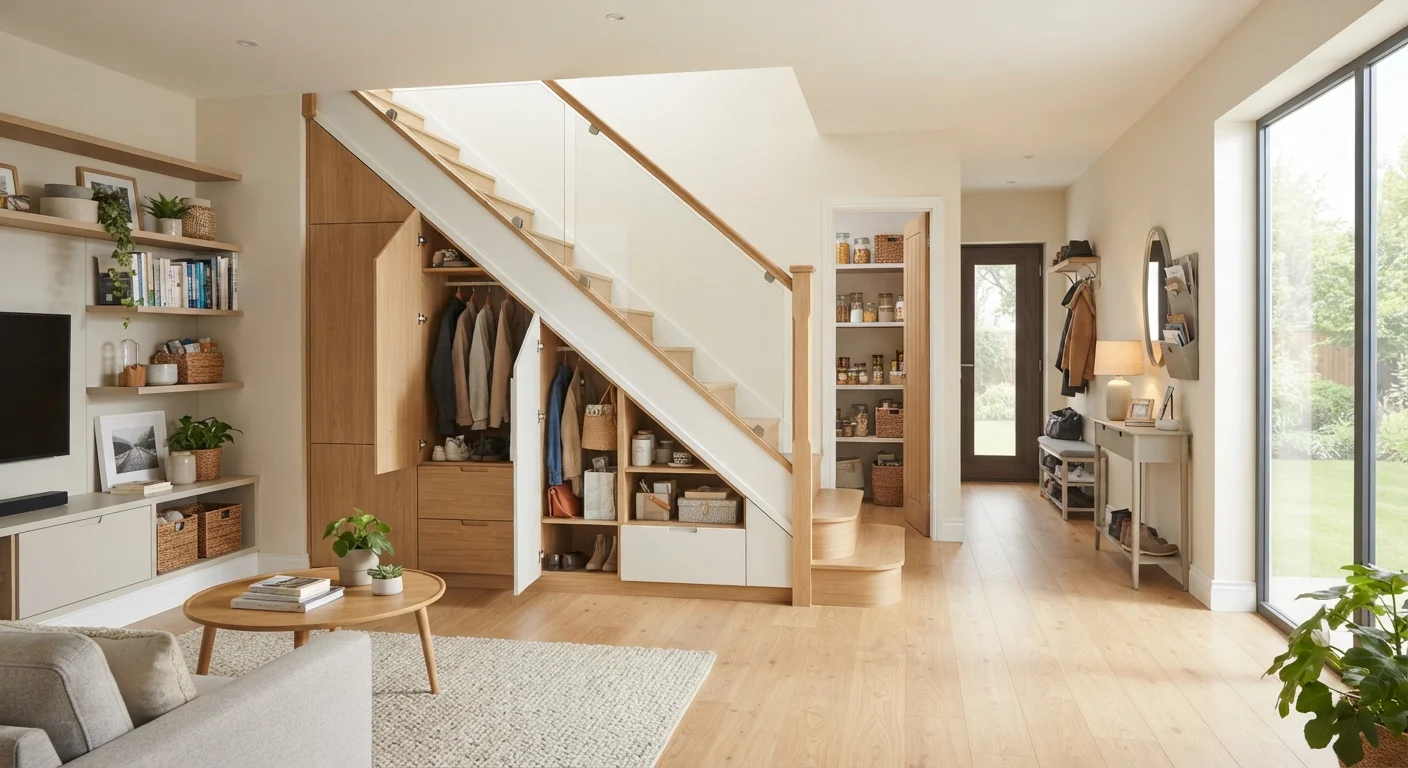
In homes with an interior staircase, the triangular cavity underneath is often closed off with drywall or used as a mechanical closet. That footprint, typically 40 to 60 square feet in a standard two-story home, is enough for a proper shelving unit, a dedicated coat and bag zone, or even a small home office nook if the ceiling height allows.
Before adding anything, check whether the space is already framed with a door or access panel. If it is, the simplest upgrade is adding adjustable shelving along the angled ceiling line so nothing is wasted. If it's sealed, consult a contractor about adding access; cutting drywall on an interior non-load-bearing wall is generally straightforward, but confirm with a professional before any structural changes.
The triangular cavity under a staircase can hold 40 to 60 square feet of usable storage.
Under-bed storage
The area beneath a bed is one of the most underused spots in a bedroom. Most bed frames sit 7 to 13 inches off the floor, which is enough clearance for flat rolling bins, shallow drawers, or vacuum-seal bags for seasonal items like extra blankets, off-season clothing, or spare bedding sets.
If the bed frame sits too low, bed risers (small blocks that fit under the legs) can raise it by 3 to 6 inches to fit standard storage containers. Label bins clearly so you're not guessing what's in them six months later.
Rolling bins and vacuum-seal bags make under-bed space practical for seasonal storage.
The backs of doors
Interior door backs, including closet doors, pantry doors, and bathroom doors, are almost always empty. An over-door organizer with pockets or hooks can hold shoes, cleaning supplies, spices, toiletries, or small tools without taking up any floor space.
One thing to check before loading up a door: the total weight of the organizer plus its contents. Heavy loads can stress the hinges over time. For anything more substantial than a fabric pocket organizer, look for versions that mount to the door itself with screws rather than hooking over the top edge.
Over-door organizers add storage without using any floor space at all.
High wall space in every room
Shelving typically stops at eye level, leaving a foot or more of wall space above it unused. Extending shelves toward the ceiling works well for items you need infrequently: extra paper goods, archival boxes, seasonal decorations, or books you're keeping but don't reach for weekly.
The trade-off is accessibility. Anything stored up high needs a step stool to retrieve, so reserve those spots for genuine long-term storage rather than everyday items. This is one of the practical considerations the open shelving vs. cabinet storage comparison covers in detail.
Extending shelves toward the ceiling works well for items you need infrequently.
The space above kitchen cabinets
In kitchens where cabinets don't reach the ceiling, the gap above them collects dust and looks unfinished. That gap can hold baskets or bins for items used only a few times a year, like large serving platters, a turkey roaster, or specialty appliances.
Because this space collects grease and dust near a cooking area, use closed containers rather than open baskets. Label the front of each container so you can identify contents without pulling them all down.
Closed, labeled bins above kitchen cabinets keep rarely used items accessible but out of the way.
Corner areas throughout the home
Corners in living rooms, bedrooms, and home offices often go completely unused or hold a single decorative item. A corner shelf unit, a floor-to-ceiling corner shelving tower, or even a freestanding corner cabinet turns that dead zone into functional storage without blocking traffic flow.
In a home office, a corner desk with hutch storage above it makes use of the same footprint. In a bedroom, a corner wardrobe can supplement a small closet without crowding the rest of the room.
A floor-to-ceiling corner shelf turns a dead zone into real storage without blocking foot traffic.
The garage ceiling and walls
Garage walls and ceilings hold significant storage potential that most homeowners leave unused. Overhead ceiling racks (mounted to the ceiling joists) are designed for bins, luggage, and seasonal equipment. Wall-mounted track systems with adjustable hooks hold bicycles, ladders, garden tools, and sports gear off the floor entirely.
For any ceiling-mounted system, follow the manufacturer's weight limits and anchor into joists, not just drywall. If you're unsure about the installation, a handyman or contractor can confirm the correct approach. See the home maintenance guidance section for more on working safely in the garage.
Overhead ceiling racks in the garage free up floor space and hold bins, luggage, and seasonal gear.
Putting it into practice
The most common mistake is buying storage products first and figuring out placement second. Measure the space, decide what you want to keep there, then choose what holds it. A shallow over-door rack that works well for cleaning supplies in one home may be the wrong depth for another door that swings into a narrow hallway.
For smaller spaces, the strategies that work in tight closets apply to many of these spots as well: use vertical layers, keep frequently accessed items at eye level, and group related things together so the system stays logical over time.
If your household includes multiple adults with different habits, building a shared system that everyone understands will determine whether any new storage actually sticks.