

Our Verdict
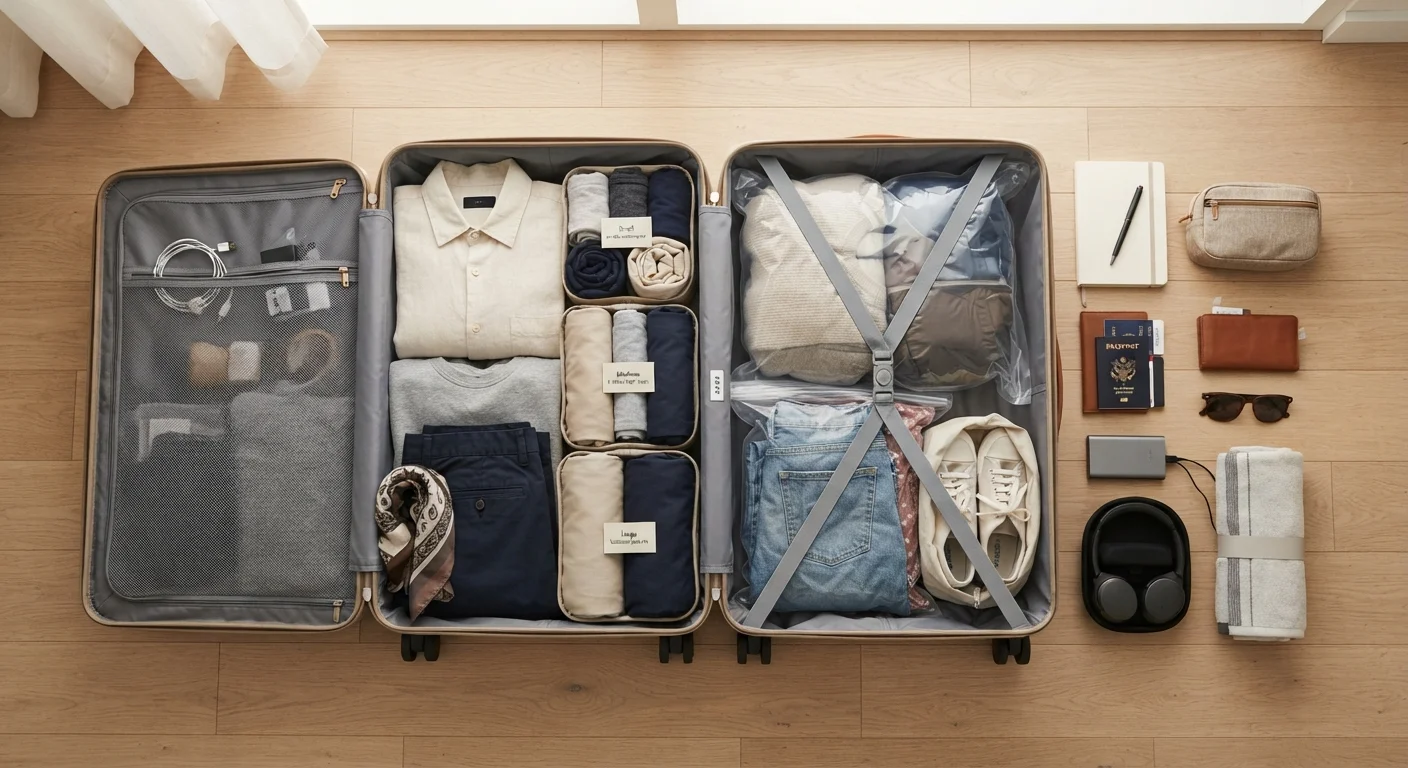
No single method wins across every scenario. Packing cubes offer the most consistent benefit for general organization, while compression bags suit specific high-bulk situations. Rolling beats folding for most casual clothing, but structured pieces still fold better.
| Best for | Recommended |
|---|---|
| Travelers who want category-based organization in any bag size | Packing cubes |
| Trips with bulky soft items like fleece or knitwear | Compression bags |
| Carry-on travelers packing mostly casual clothing | Rolling without cubes |
| Business travelers with blazers or dress shirts | Folding with cubes |
What each method actually does
Packing cubes are fabric containers, usually zippered, that group clothing into defined sections inside a bag. They do not compress clothing; they contain it. The benefit is structural: you can pull out one cube labeled "tops" without disturbing the rest of your bag.
Compression bags remove air from clothing through a one-way valve or a roll-down seal. This can reduce bulk by a meaningful amount for the right fabrics, though the bag gains weight from the bags themselves, and clothes emerge wrinkled.
Rolling and folding are techniques applied to individual garments before they go into the bag, with or without cubes. Rolling works by turning clothing into a cylinder, which can fit into corners and gaps that flat-folded items miss. Folding stacks garments in flat layers, which suits structured pieces that hold a shape.
For a broader look at how these choices interact with your overall luggage decision, see this guide to carry-on vs. checked bags.
Packing cubes: where they help and where they fall short
Cubes work best in rectangular bags with a clamshell opening, such as rolling suitcases, where the interior dimensions match cube shapes cleanly. In a backpack or duffel with a top-loading design, odd-shaped cubes can create dead space at the top and sides.
The organizational payoff is real. Travelers who use cubes by category (tops, bottoms, underlayers) report faster repacking at each destination and less time searching through a bag. That advantage compounds on multi-city trips where you open and close your bag frequently.
Cubes do not help you pack less. If you fill four cubes to capacity, you have not saved space over packing the same items loosely. The tendency to overpack can actually worsen with cubes, because the containers create a false sense of how much fits.
| Packing cubes | Compression bags | Rolling | Folding | |
|---|---|---|---|---|
| Space saved | None on its own | High for soft/bulky items | Low to moderate | None |
| Organization benefit | High | Low | Low | Low |
| Wrinkle risk | Low | High | Medium | Low for structured items |
| Best bag type | Clamshell suitcase | Any | Backpack or duffel | Clamshell suitcase |
| Best clothing type | Any | Down, fleece, knitwear | Jerseys, T-shirts, chinos | Dress shirts, blazers, linen |
| Mid-trip usability | High | Medium | High | High |
| Added weight | Low | Medium | None | None |
Compression bags: real gains and real trade-offs
Compression bags are most effective on soft, lofty items: down jackets, thick sweaters, fleece pullovers. Compressing a down jacket can reduce its packed size by roughly half. For cotton T-shirts or jeans, the gains are modest and the wrinkle cost is higher.
Two formats exist. Vacuum-seal bags require a vacuum or pump and are impractical mid-trip. Roll-compression bags seal with a zipper, then you roll the bag to push air out through a valve. These are far more practical for travel, though they lose compression if the valve leaks over time.
Weight is a legitimate concern. If you are on a carry-on-only strategy, the bags themselves add grams. For checked luggage on a winter trip loaded with bulky outerwear, compression bags often justify that trade-off.
Rolling vs. folding: what the fabrics tell you
Rolling works well for jersey fabrics, T-shirts, chinos, and knitwear with stretch. The cylinder shape resists creasing because there are no sharp fold lines pressed into the fabric under weight. Clothes also stack efficiently in rows, making every item visible when you open the bag.
Folding works better for woven fabrics that hold a sharp crease: dress shirts, linen pants, blazers. A folded dress shirt placed flat on top of other items stays far neater than one rolled into a tight cylinder. For these garments, a dry-cleaning bag or tissue paper between layers reduces friction and wrinkles further.
The hybrid approach that many frequent travelers use: roll casual items and compress bulky ones into cubes, then fold structured garments and place them as a flat layer on top. This approach treats the bag as zones rather than applying one rule to everything.
If you are building your packing approach from the ground up, this beginner's packing guide covers bag selection and layout decisions alongside these techniques.
Test your method before you travel
Pack your bag at home two days before departure using whatever method you plan to use, then open and repack it once. This reveals whether your chosen system holds up in practice and gives you time to adjust. It also confirms that everything fits before you are standing at a check-in counter.
Matching method to bag and trip type
A weekend carry-on benefits most from rolling without cubes. The bag is small enough that categories are self-evident, and rolling fills the cylindrical interior of a backpack efficiently. Adding cubes in a small bag often means wasted space at cube edges.
A two-week checked suitcase is where cubes and compression bags earn their place together. Cubes keep laundry separated from clean clothes on the return trip, and compression bags handle the bulky cold-weather layer that would otherwise dominate the available space.
Business travel favors folding with a single flat-pack cube or a packing folder. The goal is arriving with a shirt that can go directly from bag to meeting without ironing. Rolling fails that test for most woven dress shirts.
For a direct comparison of how bag choice itself shapes your packing options, this carry-on vs. checked bag breakdown covers the logistics in detail.