

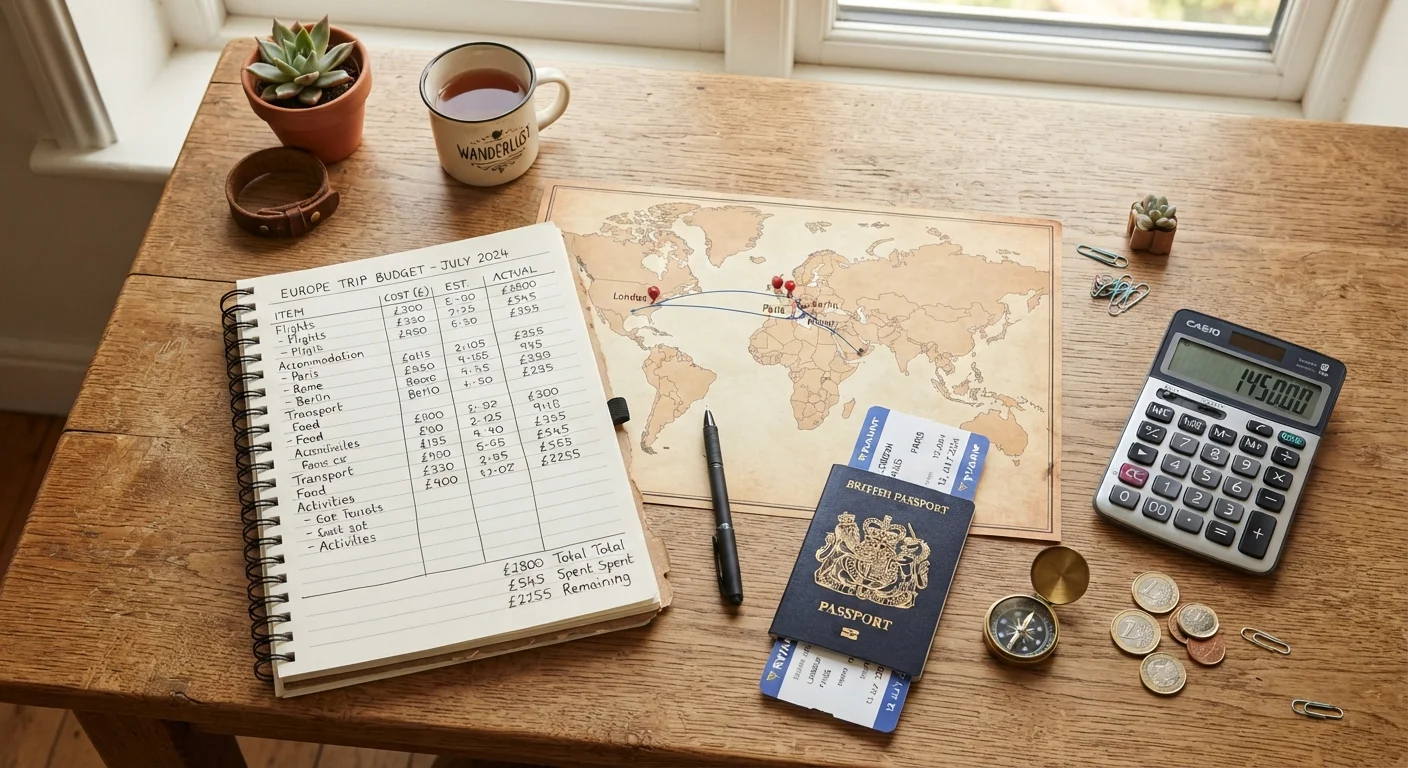
Key Takeaways
- Separate your budget into fixed pre-trip costs and variable daily costs to avoid confusion.
- Hidden costs like airport transfers, entry fees, and checked bags routinely add 15 to 25 percent to a trip total.
- A daily spending target is more useful than a single lump-sum figure when managing on-the-road expenses.
- A 10 to 15 percent buffer protects against genuine surprises without padding every line item.
- Tracking actual spending during your trip helps you adjust in real time and plan better next time.
Start here
Why most travel budgets fail before the trip begins
Next
The four budget categories every trip needs
Then
Hidden costs most first-timers miss
Apply it
How to set a realistic daily spending target
Finish strong
Building in a buffer without inflating your budget
Why most travel budgets fail before the trip begins
Most travel budgets fail for one reason: planners start with a round number and work backward instead of building from actual costs. Someone decides they want to spend $3,000, then tries to fit flights, hotels, food, and activities into that figure. When reality does not cooperate, something gets cut or the budget quietly expands.
A better approach starts with categories. List what the trip will actually require, research realistic prices for each item, and add them up. The total may surprise you, and that surprise is useful information. It tells you whether the trip is feasible at this stage, whether you need more time to save, or whether adjusting the destination or trip length brings costs in line.
The common reasons travel budgets fall apart usually come down to skipped categories and over-optimistic estimates. Both are avoidable with a structured approach from the start.
Fixed pre-trip costs
Expenses you pay before departure that do not change based on daily decisions, such as flights, accommodation bookings, and visa fees.
Variable daily costs
Expenses that depend on what you do and eat each day, including meals, local transport, and activities.
Daily spending target
The maximum amount you plan to spend per day on variable costs, used to pace your spending throughout the trip.
Budget buffer
A reserved amount, typically 10 to 15 percent of your total estimate, set aside for unexpected or emergency costs.
Per diem
Latin for 'per day.' In travel planning, it refers to the daily allowance you allocate for variable expenses.
The four budget categories every trip needs
Divide your budget into four categories. These cover the full range of travel costs without overlap.
Transportation
This includes flights or fuel, airport transfers at both ends, and any intercity travel (trains, buses, rental cars). Do not forget parking fees if you drive to the airport.
Accommodation
Price out your actual nights at your actual destination. Costs vary by neighborhood, season, and how far in advance you book. Do not use a city-wide average if your itinerary places you in a more expensive district.
Food and drink
Estimate a realistic per-meal cost based on how you actually eat, not on the cheapest possible option. If you eat breakfast out every day, price that out. If you plan one nicer dinner, include it.
Activities and incidentals
Museums, tours, day trips, and entry fees belong here. So do laundry, souvenirs, and any local SIM cards or phone plans. Small items in this category add up faster than most people expect.
Once you have totals for all four, you have your base estimate. The core principles of personal budgeting apply directly here: be honest about past spending patterns and build from there.
Hidden costs most first-timers miss
- Travel insurance premiums
- Visa or entry fees (check the official government site for your destination)
- Checked baggage fees on budget carriers
- Airport meals and snacks during layovers
- Tips and service charges in destinations where tipping is customary
- Currency exchange fees or foreign transaction charges on your card
- Required travel vaccinations or health documentation (verify current requirements with the CDC and your destination's official health authority)
Add these as a separate line item in your planning spreadsheet. Individually each one is small, but together they routinely add 15 to 25 percent to a trip total.
Avoid single-source price research
Prices on any one travel site may not reflect current reality, seasonal surcharges, or local conditions. Cross-check accommodation and activity costs across at least two sources, and check the official tourism or government site for your destination when looking at entry fees or vaccination requirements. Verify all travel entry requirements with official government sources before you depart, as rules can change.
How to set a realistic daily spending target
A daily spending target converts your variable costs into a per-day figure you can actually track on the road. Calculate it by dividing your total estimated variable costs (food, activities, local transport) by the number of travel days.
For example, if you estimate $600 for food and $240 for local activities over 10 days, your daily target is $84. That number tells you concretely whether you are ahead or behind pace each evening.
Adjust the target for days that are structurally more expensive, such as arrival or departure days with airport transfers, or days with a paid tour. Treat those as known exceptions rather than surprises.
Track spending as you go
Write down or log every purchase during your trip, even small ones. Reviewing your totals each evening takes two minutes and tells you immediately whether you are on pace. This habit also builds the real-world data you need to budget more accurately on your next trip.
Once you have a working daily target, you can build a day-by-day view of the trip. The day-by-day itinerary guide covers how to structure your time alongside your spending so neither plan undercuts the other.
Building in a buffer without inflating your budget
A buffer is not permission to overspend. It is a reserved amount for genuine surprises: a rebooking fee after a missed connection, an urgent pharmacy stop, or a night of accommodation when a flight is canceled.
Set the buffer at 10 to 15 percent of your total estimated budget and keep it in a separate line in your tracker. If you use none of it, that money stays with you. If you use part of it, you know exactly how much you drew down and why.
Do not pad individual line items as a substitute for a buffer. Inflating every category by a vague 20 percent makes your tracker meaningless and obscures where real money goes. One clean buffer line is more transparent and easier to manage.
Preparing a solid budget is one part of trip readiness. The beginner packing guide and the planning habits of experienced travelers cover the rest of the groundwork that makes a trip run smoothly. For road trips specifically, the road trip planning guide includes cost considerations specific to driving itineraries.