

Key Takeaways
- Road rage ranges from aggressive gestures to physical confrontations, and any level can escalate quickly.
- Most aggressive driving incidents are triggered by perceived disrespect, not actual danger.
- De-escalating your own frustration is the most reliable way to stay out of conflict.
- If another driver is threatening, do not stop, argue, or make eye contact.
- Calling 911 is appropriate when you feel physically threatened or witness dangerous driving.
What road rage actually is
Road rage describes aggressive or violent behavior by a driver directed at another road user. It sits at the far end of a spectrum that begins with ordinary frustration and moves through aggressive driving behaviors like tailgating, excessive horn use, cutting off other vehicles, and making threatening gestures. At its most severe, it involves physical confrontation or using a vehicle as a weapon.
Aggressive driving and road rage are related but legally distinct. Aggressive driving is typically a traffic offense: speeding, following too closely, failing to yield. Road rage crosses into criminal territory when a driver intends to intimidate or harm. That distinction matters because the appropriate response differs depending on where a situation falls on that scale.
The car safety practices that protect drivers in most situations apply here too, but road rage adds a social and psychological dimension that pure mechanical driving skill does not cover.
Common triggers behind aggressive driving
Most road rage incidents are not caused by genuine danger. They are caused by a driver interpreting another driver's action as disrespectful or intentional. A slow merge, a missed signal, or a late brake can feel like a personal insult when stress is already high.
Several conditions make aggressive reactions more likely:
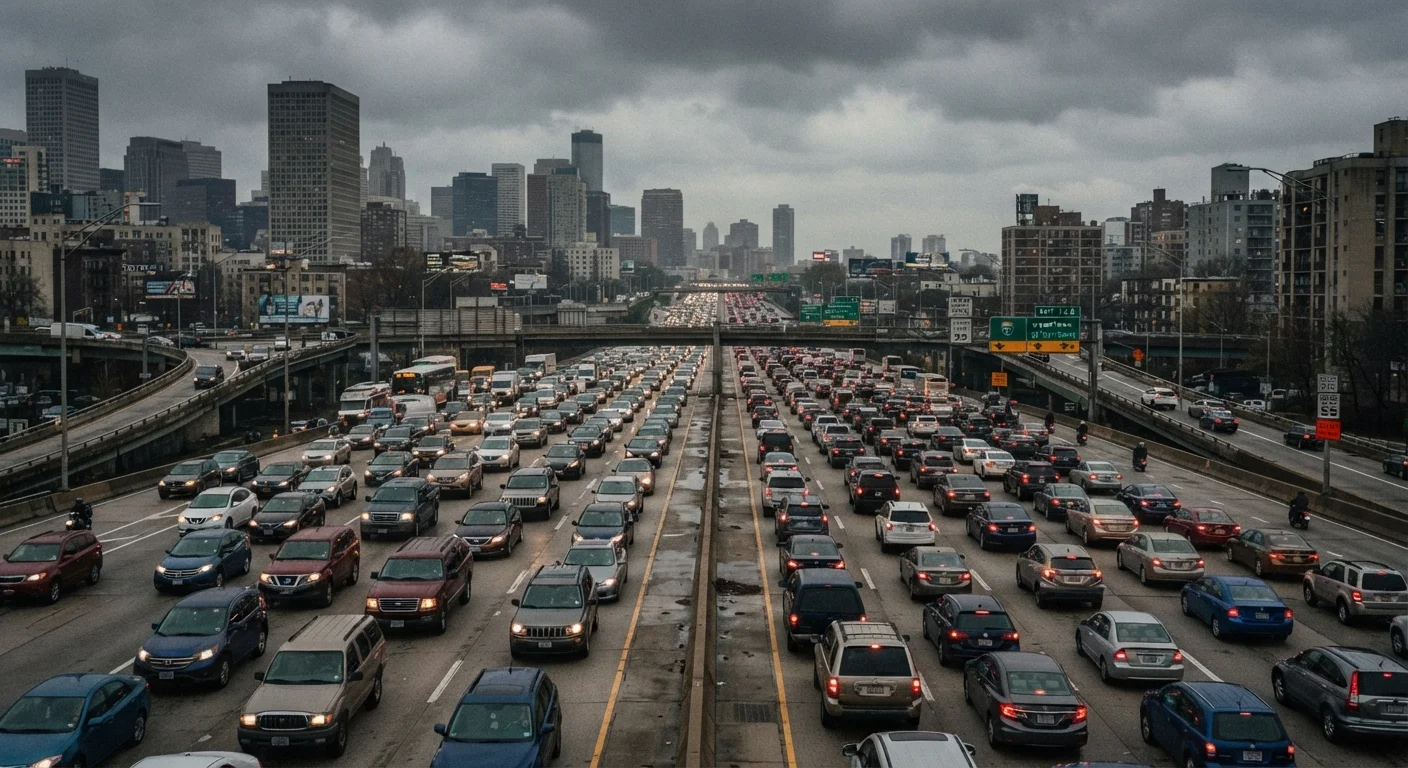
- Heavy congestion, which stretches trip times and reduces a driver's sense of control
- Running late, which raises the emotional cost of every slowdown
- Heat, fatigue, or other physical discomfort inside the vehicle
- A pattern of high-stress days that lowers the threshold for frustration
- Anonymity: the psychological distance created by being inside a vehicle can lower social inhibitions
Understanding these triggers is not an excuse for aggressive behavior. It is a practical tool for recognizing when you or someone around you is at elevated risk. Defensive driving principles train drivers to read the road environment, and that includes reading the behavior of stressed or erratic drivers nearby.
Recognize your own warning signs
Gripping the wheel hard, muttering at other drivers, or speeding up when someone merges near you are early signs of rising frustration. Noticing these responses early gives you time to adjust before your driving is affected.
Managing your own frustration behind the wheel
The most reliable way to stay out of a road rage incident is to avoid contributing to one. That means monitoring your own state before and during a drive.
If you feel your frustration rising, a few concrete steps help. Give yourself more following distance, which reduces the number of perceived provocations per mile. Avoid horn use except as a genuine safety warning: a horn in slow traffic signals annoyance and can escalate the other driver's state. Do not match pace with a vehicle you find irritating; slow down or change lanes to create separation.
Avoid eye contact with a driver who has already shown aggression. Eye contact can read as a challenge even when you intend it as neutral acknowledgment. A brief, flat expression tells the other driver nothing worth reacting to.
If your driving habits include things that commonly provoke others (cutting lanes without signaling, blocking the passing lane, merging at the last moment), adjusting those habits reduces conflict before it starts. Defensive driving habits address exactly this: driving in a way that is predictable and considerate reduces the emotional friction of shared road use.
Before a long or stressful drive, add five to ten minutes of buffer time to your schedule. The physical act of removing time pressure changes how you interpret minor delays.
Much of in-vehicle frustration is tied to perceived time loss. Reducing that pressure before you start reduces the frequency and intensity of reactive responses.
If you catch yourself rehearsing what you would say to the other driver, that is a sign your arousal level is high enough to affect your judgment. Focus on your own lane and speed instead.
Mental rehearsal of confrontation sustains the anger response. Redirecting attention to your own driving variables is a practical, evidence-consistent way to interrupt that cycle.
What to do when another driver becomes aggressive
When a driver is actively directing anger at you, the goal is separation, not resolution. Do not try to explain yourself, apologize through gestures, or match their behavior. Any engagement prolongs the interaction.
Do not stop your vehicle unless traffic forces you to. If a driver is following you, do not go home or to a location where you will be alone. Drive to a police station, a fire station, or another public place with people present. Staying in a populated, visible area reduces the risk of physical confrontation.
Keep your doors locked and windows up if another vehicle pulls alongside yours. If someone exits their vehicle and approaches yours, honk repeatedly to draw attention and, if safe to do so, drive away.
These situations can feel sudden, but the same attentiveness that helps with other hazards applies here. Reading traffic flow on highways gives you more options to separate from an aggressive driver before a situation intensifies.
Do not exit your vehicle during a confrontation
Leaving your car during a road rage confrontation dramatically increases the risk of physical harm. Even if the other driver exits their vehicle, staying inside with your doors locked and moving away from the situation is the safer choice. A vehicle provides both protection and mobility.
When to contact law enforcement
Call 911 if you feel physically threatened, if another driver is following you with apparent intent, or if you witness driving that puts other people in immediate danger. Provide your location, a description of the vehicle, and the direction of travel. You do not need to have a license plate to make a useful report.
If you are a passenger, one person can focus on the call while the driver focuses on the road. Do not attempt to record video on your phone while driving: the distraction is not worth any evidence you might capture.
After an incident, even one that ended without physical contact, it is reasonable to file a non-emergency police report. That creates a record if the behavior recurs or if the situation was more serious than it appeared at the time.
Being a attentive driver in shared spaces means accounting for the full range of road users and conditions, including other drivers whose behavior is unpredictable. The habits that help you navigate intersections safely are the same ones that keep you out of conflict when another driver loses composure.