

Key Takeaways
- Defensive driving is a mindset focused on anticipation, not just reaction.
- Maintaining a safe following distance is one of the most effective habits a driver can build.
- Scanning the road ahead and checking mirrors regularly helps you spot hazards early.
- Emotional state affects driving performance; managing frustration is part of staying safe.
- Technology in modern vehicles assists drivers but does not replace attentive driving.
Defensive driving
Defensive driving is an approach to operating a vehicle that goes beyond following traffic laws. It means actively scanning for potential hazards, anticipating what other drivers might do, and maintaining enough space and attention to respond safely before a situation becomes critical. The goal is to reduce risk by staying ahead of problems rather than reacting to them.
Defensive driving draws on concepts from risk management, including hazard perception, space management, and probabilistic thinking about driver behavior in complex traffic environments.
What defensive driving actually means
Most drivers think of themselves as careful. Defensive driving is something more specific: it is the practice of managing your vehicle with the assumption that other road users may make mistakes, and that conditions can change faster than a distracted driver can respond.
The core idea is hazard anticipation. A defensive driver does not just react to what is happening; they read the road ahead, identify situations that could turn dangerous, and adjust speed, position, or attention before a problem develops. This is different from simply obeying traffic laws, which set a legal minimum rather than a safety standard.
Defensive driving also includes managing your own behavior. Fatigue, distraction, and frustration all degrade driving performance in measurable ways. A driver who is emotionally calm and physically alert is better positioned to catch early warning signs. For a closer look at how anger affects decisions behind the wheel, see how road rage escalates and how to manage it.
The habits that define it
Defensive driving rests on a handful of consistent practices rather than any single technique.
Space management is the foundation. The gap between your vehicle and the one ahead gives you time to react if traffic stops suddenly. Most drivers leave far less space than they realize. Following distance and why it matters explains how to judge that gap accurately in real conditions, including rain and highway speeds.
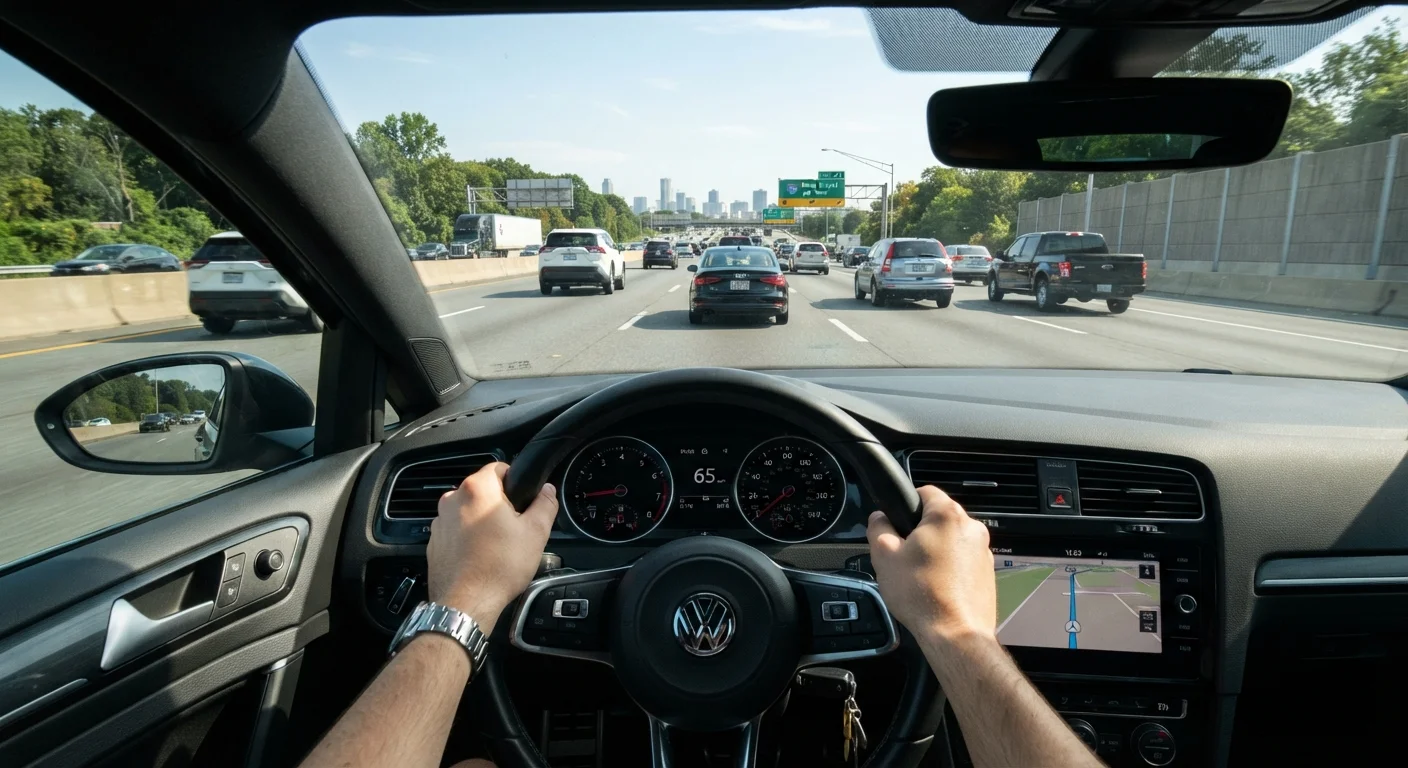
Visual scanning means actively looking further down the road and checking mirrors on a regular cycle, not just glancing forward when nothing seems wrong. A driver who spots a merging truck or a pedestrian stepping off a curb five seconds early has options. A driver who sees the same thing at one second has almost none.
Speed management goes beyond staying under the posted limit. Conditions like wet pavement, heavy traffic, or reduced visibility change what speed is actually safe. Posted limits reflect normal conditions; adjusting for current ones is the driver's responsibility.
Reduced distraction is straightforward in principle and consistently difficult in practice. Phone use, in-car screens, and even conversations pull attention away from the road. Defensive drivers treat the driving task as the primary task, not a background one.
Practice the 12-second scan
Train yourself to look roughly 12 seconds down the road rather than focusing on the vehicle directly ahead. In city driving, that is about one city block. On a highway, it is considerably further. This habit alone gives you more time to identify hazards and decide how to respond before they arrive.
Sharing the road with cyclists and pedestrians requires the same anticipatory mindset. Driver responsibilities at intersections and crosswalks covers where conflicts most often occur and what attentive driving looks like in those situations.
How technology fits in
Modern vehicles include a range of driver assistance features, from automatic emergency braking to lane departure warnings. These systems can reduce the severity of some incidents, but they work within narrow parameters and are not substitutes for attention.
Advanced driver assistance systems (ADAS) are designed to catch errors in specific, well-defined scenarios. They can miss pedestrians in poor lighting, fail on unpainted roads, or activate unexpectedly in ways that surprise an inattentive driver. Understanding what a system does and does not do is part of driving the vehicle safely. For a broader view of how vehicle safety technologies relate to each other, active and passive safety systems are worth understanding together.
Defensive driving is ultimately a human skill. The mindset of anticipating hazards, managing space, and staying alert is what determines whether the gap between a close call and a collision stays open.
Why it matters in everyday conditions
Collisions are not rare events that happen in dramatic conditions. A large share occur in familiar surroundings, at moderate speeds, on dry roads, often within a few miles of the driver's home. Familiarity tends to reduce alertness, which is precisely when defensive habits matter most.
94%
Crashes involving human error or choice
According to the National Highway Traffic Safety Administration, approximately 94 percent of serious crashes involve human error as a critical reason.
3 seconds
Minimum recommended following distance
Traffic safety guidelines commonly recommend at least a 3-second following gap in normal conditions, with more distance required in poor weather or at highway speeds.
The car safety practices every driver should know extend beyond the vehicle itself. The driver's behavior, attention level, and willingness to adjust to conditions are factors that no safety feature can fully replace.
Building defensive habits takes deliberate practice. Drivers who treat each trip as routine tend to become less alert over time. Drivers who consistently apply space management, visual scanning, and speed adjustment to each trip tend to catch the situations that matter before they escalate.