

Key Takeaways
- The eye contains specialized cells that detect light and send a direct signal to the brain's circadian clock.
- Blue-spectrum light suppresses melatonin more strongly than longer-wavelength amber or red light.
- Dim light exposure in the hour or two before bed is enough to delay melatonin onset.
- Screen brightness, room lighting, and the time of night all interact to shape the size of the effect.
- Shifting to lower-intensity, warmer-toned light in the evening is a practical, well-supported strategy for protecting sleep onset.
Light-induced melatonin suppression
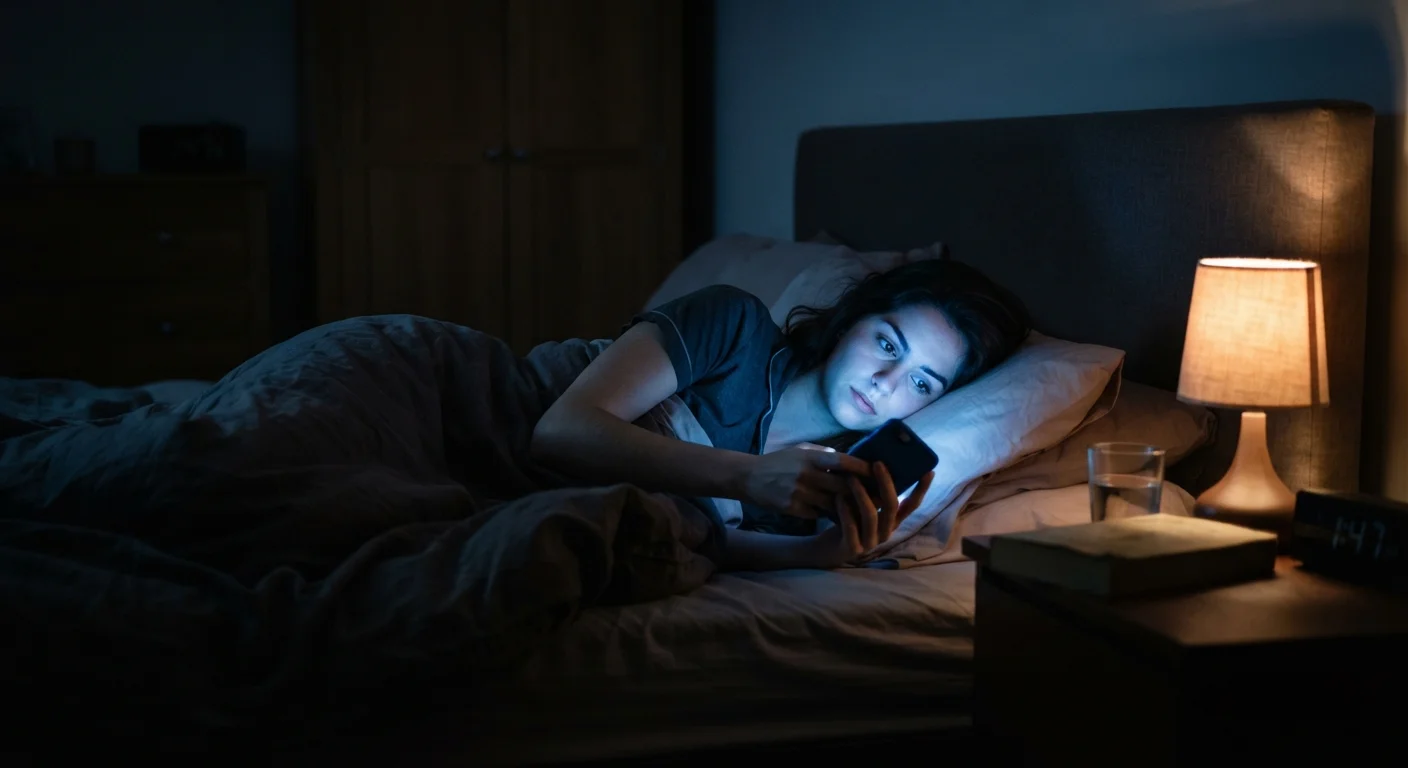
Light-induced melatonin suppression is the process by which light entering the eyes at night slows or stops the pineal gland's release of melatonin, the hormone that signals the body it is time to sleep. The effect depends on the wavelength, brightness, and timing of the light. Short-wavelength blue light, common in LED screens and energy-efficient bulbs, produces the strongest suppression.
Intrinsically photosensitive retinal ganglion cells (ipRGCs) containing the photopigment melanopsin are maximally sensitive to wavelengths around 480 nm, which falls in the blue portion of the visible spectrum.
How the eye communicates darkness to the brain
The human eye contains two broad categories of light-sensitive cells: the rods and cones involved in vision, and a separate population of cells called intrinsically photosensitive retinal ganglion cells (ipRGCs). The ipRGCs do not contribute to visual images. Their job is to measure ambient light levels and relay that information to the suprachiasmatic nucleus (SCN), the region of the brain that maintains the circadian clock.
When the SCN detects that light has dropped to low levels, it lifts its inhibitory signal to the pineal gland, allowing melatonin to rise in the bloodstream. This rise, which normally begins one to two hours before habitual sleep time, is how the body prepares for sleep. Artificial light at night interferes with that sequence because the ipRGCs cannot distinguish between sunlight and a living room lamp.
Why wavelength matters more than brightness alone
The melanopsin photopigment in ipRGCs absorbs light most efficiently at wavelengths near 480 nanometers, which corresponds to blue light. Modern LED displays, fluorescent bulbs, and many compact LED home fixtures emit a relatively high proportion of short-wavelength light compared with older incandescent technology. This is why the shift to energy-efficient lighting and screen-heavy evenings has drawn attention from sleep researchers.
Brightness still matters, and the two factors interact. A very bright source of warm amber light can still suppress melatonin if it is intense enough. A dim blue-tinted source can suppress it at lower intensities than a dim red-tinted source. The practical implication is that managing evening light means attending to both color temperature and overall illuminance, not just one variable.
A simple evening lighting swap
Consider replacing overhead bulbs in rooms you use in the two hours before bed with warm-toned (2700 K or lower) dimmable LEDs. Set them to 30 to 50 percent brightness after sunset. This does not require special equipment, just lower-intensity, warmer-toned light sources already available at hardware stores.
To understand how melatonin fits into the broader picture of sleep signaling, see what melatonin does and does not do.
The timing and dose relationship
Light exposure in the first half of the night produces a larger suppressive effect than the same exposure in the second half. The body is most sensitive to light-induced melatonin suppression in the period just before and just after habitual sleep onset. Even relatively dim light, around 10 to 50 lux (roughly the illuminance of a softly lit room), has been shown in controlled studies to meaningfully delay melatonin onset compared with complete darkness.
This matters because delayed melatonin onset can shift sleep timing later without necessarily extending sleep duration. A person who needs to wake at a fixed time will lose sleep from the front end of the night. Over time, chronic mild suppression of the melatonin signal is associated with poorer sleep quality and shorter total sleep time, though individual responses vary. Anyone concerned about persistent sleep difficulty should speak with a healthcare provider rather than drawing conclusions from population-level data alone.
Practical changes supported by the research
The evidence consistently points toward a few adjustable factors in the home environment. Reducing overall light intensity in the hour or two before bed lowers the total photon load reaching the retina. Shifting room lighting toward warmer color temperatures (below 3000 Kelvin) during evening hours cuts the proportion of blue-spectrum output. Dimming screen brightness, rather than relying solely on software night modes, addresses the intensity component that color filters leave unchanged.
Wearable blue-light-blocking glasses with amber-tinted lenses have shown measurable effects in some studies, though the quality and filtering efficiency of different lens types vary. They are not a substitute for addressing source lighting.
For a broader look at environmental and behavioral factors that support sleep, the evidence-based habits for restorative sleep article covers additional strategies, and temperature's role in sleep onset addresses another often-overlooked environmental variable. Light is one input among several that the brain integrates as it determines when to initiate sleep.
This article provides general health information and education only. It is not medical advice. Consult a qualified healthcare professional for guidance on your individual sleep health or any medical concerns.