

Key Takeaways
- Melatonin is a timing hormone, not a sedative; it signals the body to prepare for sleep rather than inducing it directly.
- The pineal gland releases melatonin in response to dim light, typically starting a couple of hours before habitual sleep time.
- Bright artificial light after dark can suppress melatonin production and delay sleep onset.
- Supplement research suggests low doses are generally more consistent with the body's natural range than high doses.
- Melatonin supplements are regulated as dietary supplements in the US, not as drugs, so potency and purity can vary across products.
- Anyone considering melatonin supplements should discuss timing, dose, and duration with a qualified healthcare provider.
Melatonin
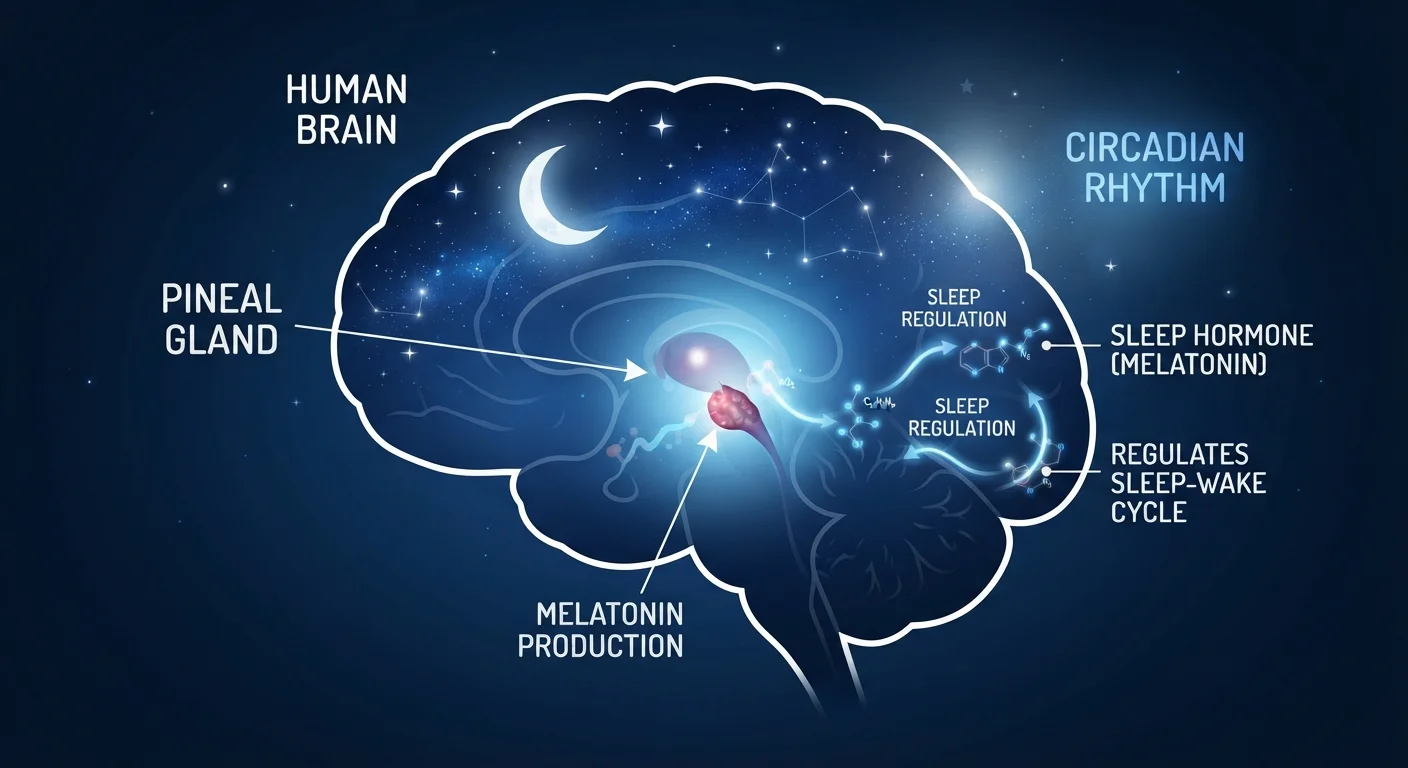
Melatonin is a hormone the brain's pineal gland produces in response to darkness. It signals to the body that night has arrived, helping to time the onset of sleep as part of the 24-hour circadian cycle. It does not force sleep directly; it shifts the body's readiness to sleep. Synthetic melatonin is also sold as a dietary supplement in the United States.
Melatonin binds to MT1 and MT2 receptors in the suprachiasmatic nucleus (the brain's central circadian pacemaker), modulating the timing of the sleep-wake cycle rather than generating sleep pressure like adenosine does.
What melatonin actually does in the body
Melatonin's job is timekeeping, not sleep itself. As evening light fades, the retina sends a signal through the suprachiasmatic nucleus (the brain's central circadian clock) to the pineal gland, which begins releasing melatonin into the bloodstream. This rise in melatonin tells the body that night has begun and that sleep should follow soon.
Levels typically peak in the middle of the night and fall before dawn, helping align the sleep-wake cycle with the light-dark environment. To understand how this fits into the broader 24-hour system, the article on your circadian rhythm and internal clock covers the full picture of how biological timing works.
Melatonin does not generate sleep pressure the way adenosine does (adenosine is the compound that builds up throughout the day and creates the drive to sleep). This distinction matters because taking more melatonin does not produce proportionally more sleep the way a sedative might.
~0.1 to 0.3 ng/mL
Typical daytime melatonin blood level
Nighttime levels generally rise to 1 to 10 times daytime levels depending on age and individual variation, according to published pharmacological reviews.
Up to 478%
Labeling inaccuracy in some melatonin supplements
A 2017 study published in the Journal of Clinical Sleep Medicine found actual melatonin content in tested products ranged from 83% below to 478% above the labeled dose.
~2 hours
Typical time before sleep for melatonin to rise
Under normal conditions, endogenous melatonin secretion begins roughly 2 hours before habitual sleep time, a marker researchers call dim light melatonin onset (DLMO).
How light disrupts melatonin production
The eye contains photoreceptors called intrinsically photosensitive retinal ganglion cells, which are especially sensitive to short-wavelength (blue) light. Exposure to bright light after dark, whether from screens, overhead LEDs, or other sources, can suppress melatonin production and push sleep onset later.
This is one reason that the timing and type of evening light matters for sleep quality. The article on artificial lighting and the sleep signal goes deeper into the specific wavelengths involved and what the evidence says about practical mitigation. Similarly, what happens to your body during sleep explains why the timing of sleep onset influences the stages you move through overnight.
Dimming lights 90 minutes before bed
Reducing overhead lighting and screen brightness in the 90 minutes before your target sleep time allows melatonin production to rise closer to its natural schedule. This behavioral change works through the same pathway that melatonin supplements target, without requiring supplementation.
Melatonin supplements: what research shows
Melatonin supplements are widely available in the US as over-the-counter dietary supplements. Research has examined their use for jet lag, shift-work sleep disruption, and delayed sleep phase disorder, with generally more consistent results for circadian timing problems than for chronic insomnia.
One well-documented issue is dosing. Many commercial products contain 5 mg to 10 mg per tablet, yet studies using doses around 0.5 mg have raised blood melatonin to levels within the body's normal nighttime range. Higher doses can produce blood concentrations far above physiological levels, and the long-term effects of routinely exceeding that range are not fully established.
Because the US Food and Drug Administration classifies melatonin as a dietary supplement rather than a drug, products are not required to demonstrate safety or efficacy before sale, and independent testing has found meaningful variability in actual melatonin content across brands.
For people whose sleep difficulties are tied to caffeine timing, the article on how caffeine affects sleep onset is worth reading alongside this one, since caffeine and melatonin interact with different parts of the sleep-wake system.
When to involve a healthcare provider
Melatonin supplements can interact with certain medications, including blood thinners, immunosuppressants, and diabetes medications. People who are pregnant, breastfeeding, managing a chronic health condition, or giving supplements to children should consult a qualified healthcare provider before starting any melatonin regimen.
Persistent sleep difficulties, regardless of cause, deserve a proper evaluation rather than long-term self-managed supplementation. Conditions such as sleep apnea, restless legs syndrome, or clinical insomnia require diagnosis and treatment that melatonin cannot provide.
If you are considering melatonin, a healthcare provider can help determine whether the underlying problem is a circadian timing issue (where melatonin may be useful) or a different sleep disorder (where other approaches are more appropriate). The article on common sleep myths covers several widely held beliefs about sleep that can lead people toward the wrong solutions.
This article is for general informational purposes only and is not medical advice. Always consult a qualified healthcare professional before starting, stopping, or changing any supplement or treatment.