

Key Takeaways
- Caulk seals the gap between a window or door frame and the surrounding wall, blocking air and moisture.
- Failing caulk shows as cracks, gaps, missing sections, or a brittle texture you can feel with your fingers.
- Most exterior recaulking is a manageable DIY task that requires basic tools and surface prep.
- Interior caulking around window trim is typically cosmetic but also helps with air sealing.
- Recaulking before winter can reduce heat loss through gaps that are otherwise invisible.
Caulk (window and door sealant)
Caulk is a flexible, waterproof compound applied to gaps and joints around windows, doors, and other building openings. It seals out air, moisture, and insects by filling the space where a frame meets a wall or another surface. Over time, caulk dries out, shrinks, or pulls away from surfaces, leaving gaps that allow drafts and water intrusion.
Most exterior caulks are silicone or siliconized latex (also called paintable silicone). Pure silicone bonds better to non-porous surfaces and lasts longer, while latex-based formulas are easier to tool and can be painted over once cured.
What caulk actually does
Windows and doors sit inside frames that are set into wall openings. Where the frame meets the surrounding wall, siding, or trim, there is almost always a small gap. That gap exists because wood expands and contracts with temperature and humidity, and because no installation is perfectly flush. Caulk fills that gap and holds a flexible seal against air movement and water entry.
Without a working seal, outdoor air pushes through in winter and summer, and rainwater can work its way behind siding or into wall cavities. Water in a wall cavity does not always stay contained. For context on how minor moisture intrusion can escalate, see how water damage progresses over time.
Caulk is not structural. It does not hold frames in place or bear any load. Its job is purely to maintain a flexible, weathertight border between two surfaces that may move slightly relative to each other.
Signs that caulk is failing
Most caulk failure is visible on close inspection. Run your eyes along the joint between the window or door frame and the wall or siding on all four sides. Look for:
- Cracks running along the length of the bead
- Sections that have pulled away from one or both surfaces, leaving an open gap
- A chalky or brittle texture when you press gently with a fingernail
- Missing sections where the old caulk has fallen away entirely
- Discoloration or mold growth on the caulk surface, which can indicate trapped moisture
Inside the home, watch for drafts near window corners on cold days, or for paint peeling on interior trim near the bottom of a window sill. These are indirect signs that the exterior seal may have broken down.
Inspect on a bright day
Stand inside the room with the lights off on a sunny day and look closely around the window frame perimeter. Light visible around the frame edge confirms a gap that needs sealing. This check takes less than a minute per window.
How to recaulk a window or door
The process involves four steps: remove the old material, clean and dry the surface, apply new caulk, and tool the bead smooth.
Use a utility knife or a dedicated caulk-removal tool to cut and peel away the old caulk. Work carefully around painted trim to avoid gouging the wood. Once the old material is out, wipe the joint with a dry cloth and let it dry fully. Caulk will not bond to a damp surface, so skip this step on a rainy day or within 24 hours of rain.
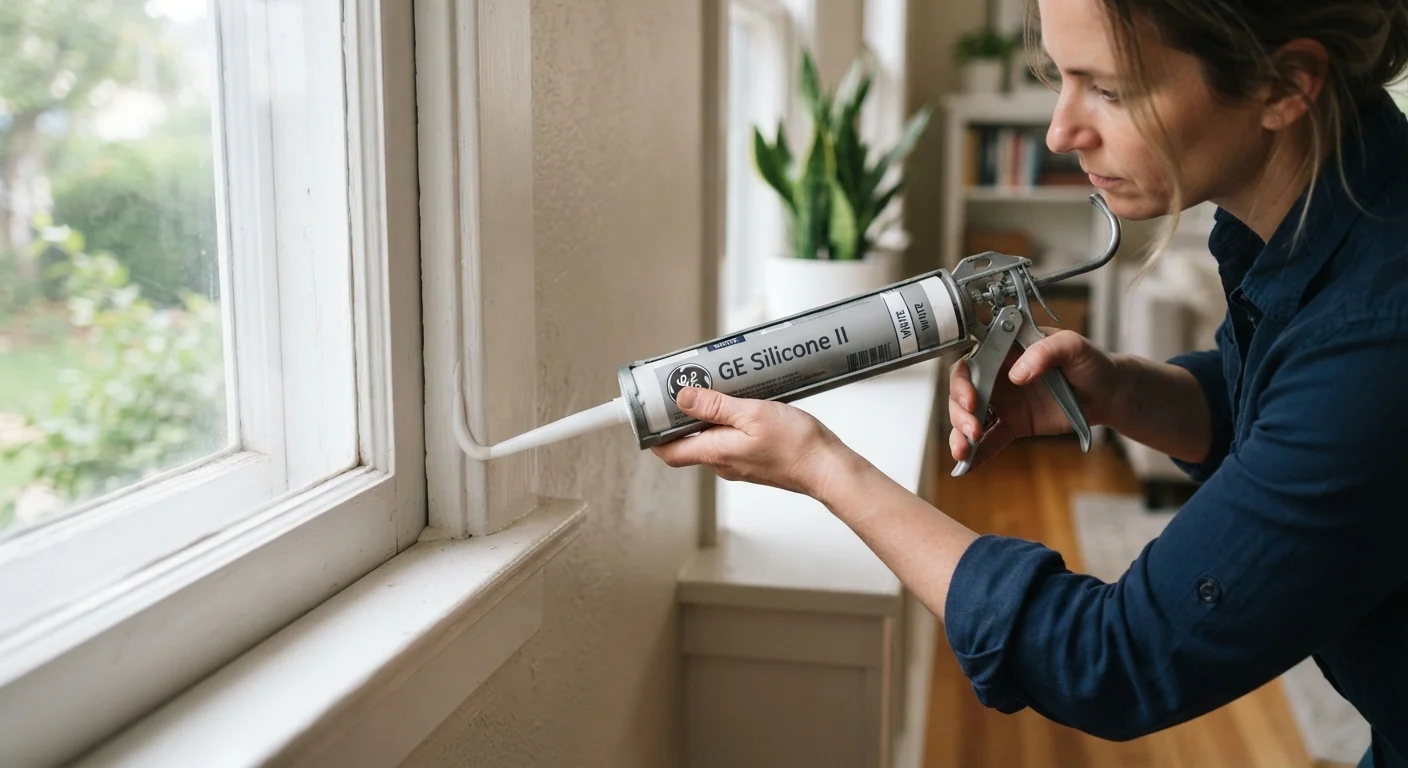
Load your caulk tube into a caulk gun, cut the tip at a 45-degree angle to match the width of the gap, and apply a steady, continuous bead along the joint. Move at an even pace. A bead that is too thick takes longer to cure and is more likely to crack later.
Smooth the bead with a wet finger or a caulk-finishing tool within a few minutes of application, before a skin forms. This presses the caulk into the joint and produces a clean, slightly concave surface that sheds water rather than collecting it.
Before any painting over the new caulk, check the product label for cure time. Most latex-silicone blends can be painted after 24 hours, but silicone-only products may take longer. Surface preparation matters here too; the same principle applies when preparing interior walls for paint.
When to call a professional
Recaulking a window or door is within reach for most homeowners with basic tools. A few situations call for a professional instead.
If the wood around the frame is soft, spongy, or discolored, that points to rot that caulk will not fix. Sealing over damaged wood traps moisture and accelerates the decay. A carpenter or window contractor needs to assess whether the frame can be repaired or should be replaced.
Gaps wider than about a quarter to a half inch are also outside the scope of caulk alone. Caulk shrinks as it cures and will not bridge a large gap reliably without a foam backer rod first. If the gap is that wide, it may reflect a settling or installation problem worth a professional look.
For a broader framework on when DIY is appropriate and when it is not, knowing where that line falls applies to home tasks as much as vehicle maintenance. When in doubt about structural or water-damage concerns, bring in a qualified contractor before you seal anything in place.
Caulking is one part of a broader pre-winter checklist. For a fuller walkthrough of what to address before cold weather arrives, see this home weatherization guide.