

| Typical gap between advertised and billed price | $10 to $30/month (Varies by provider and location) |
| Average modem rental fee | $10 to $20/month (Common range across major US providers) |
| USF fee authority | Federal Communications Commission (FCC) |
| Contract length (typical) | 1 to 2 years, or month-to-month |
| Self-install option | Available from most major providers (May waive installation fee) |
Why your internet bill rarely matches the advertised price
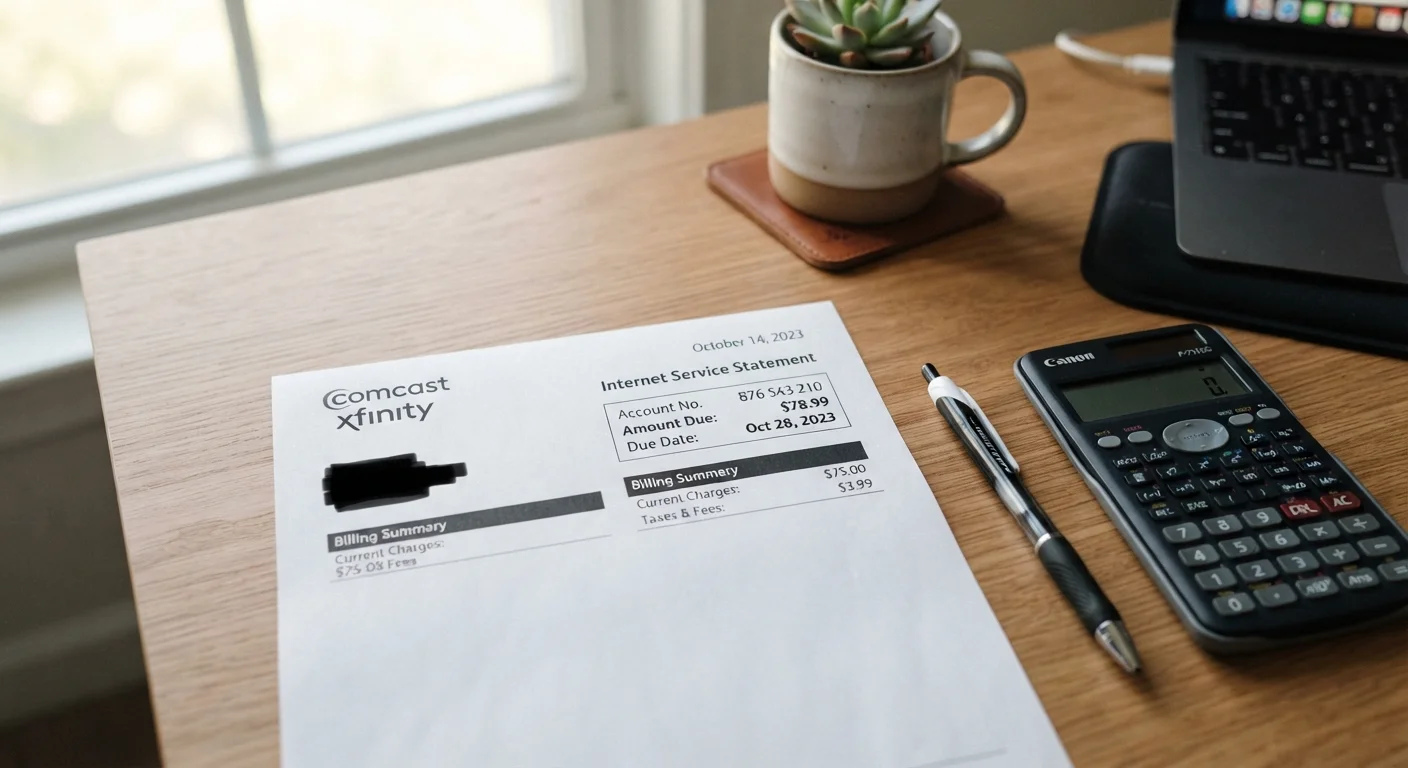
Internet providers advertise a base monthly rate, but your actual bill almost always lands higher. The gap comes from a mix of equipment fees, taxes, and surcharges that are disclosed in the fine print but rarely explained upfront. Knowing what each charge is lets you catch billing errors, ask informed questions when you call support, and decide whether a plan is actually as affordable as it looks. If you are still comparing plan types, this breakdown of DSL, cable, fiber, and fixed wireless covers how the underlying technology affects what you pay.
| Typical gap between advertised and billed price | $10 to $30/month (Varies by provider and location) |
| Average modem rental fee | $10 to $20/month (Common range across major US providers) |
| USF fee authority | Federal Communications Commission (FCC) |
| Contract length (typical) | 1 to 2 years, or month-to-month |
| Self-install option | Available from most major providers (May waive installation fee) |
Common line items and what they cover
Most internet bills contain some version of the following charges.
Base service or plan fee
This is the advertised monthly rate tied to a specific speed tier. The number on the bill should match what you agreed to when you signed up. If your plan was promotional, confirm when the promotional period ends and what the standard rate will be after it expires. Speed tiers affect the plan price directly; see what Mbps and Gbps actually mean if the tier names on your bill are not clear.
Modem or router rental fee
Providers charge a monthly fee when you use their equipment. This line item commonly appears as "equipment fee," "gateway rental," or "modem lease." The charge is typically $10 to $20 per month, which adds up to $120 to $240 per year. Many providers allow you to use a compatible modem you purchase yourself, which eliminates the rental fee. Check your provider's approved device list before buying one.
Installation or activation fee
A one-time charge for a technician visit or for activating the account remotely. Some providers waive this during promotions; others add it to the first bill without flagging it clearly. If you set up service yourself using equipment mailed to your home, ask whether the self-install option removes this fee.
Early termination fee (ETF)
If you are on a contract plan and cancel before the term ends, the provider may bill a flat fee or a prorated amount based on the months remaining. Month-to-month plans avoid this charge but sometimes cost more per month. The ETF amount should be stated in your service agreement.
Data overage charge
Providers with data caps bill extra when your household exceeds the monthly allotment. The charge is usually a flat amount per block of additional data (for example, $10 per 50 GB). How data caps are measured and tracked is worth reading if this line item appears on your bill unexpectedly.
Taxes and government fees
These vary by state and municipality and are largely outside the provider's control. Common labels include "state sales tax," "local franchise fee," "universal service fund (USF) fee," and "911 fee." The USF fee funds broadband access in underserved areas and is set by the FCC. Franchise fees go to local governments in exchange for providers using public rights-of-way.
Administrative or regulatory recovery fee
This is a provider-set surcharge, not a government tax, even though the name sounds official. Providers use it to recover costs tied to regulatory compliance. It is legal but discretionary, and the amount varies by company.
Base service fee
The monthly charge for the internet plan itself, tied to a specific speed tier. This is the number most often advertised.
Universal Service Fund (USF) fee
A federally mandated contribution collected by providers and paid to the FCC. It funds broadband access programs in rural and low-income areas.
Early termination fee (ETF)
A penalty charged when a customer cancels a contract plan before the agreed term ends. The amount may be flat or prorated.
Data cap
A monthly limit on the total amount of internet data a household can use. Exceeding the cap typically triggers an overage charge.
Franchise fee
A fee paid by the provider to a local government for the right to operate in public rights-of-way. Providers pass this cost to customers on the bill.
Administrative recovery fee
A provider-set surcharge for regulatory compliance costs. It is not a government tax, though its name can make it appear to be one.
How to check your bill for errors
Pull up three months of bills side by side, either in your online account or as paper statements. Look for any line item that changed in amount without a notice from the provider, any equipment fee on a month you returned rented gear, and any overage charge that does not match your usage history. Providers are required to give itemized statements, so every charge should have a label. If a line item has no description, call customer support and ask for a written explanation. For households building a monthly budget, tracking your internet cost alongside other utilities fits naturally into core budgeting strategies.
If you moved recently and set up service for the first time, this first-timer's walkthrough for home internet setup explains what to expect on your first bill and how equipment choices affect ongoing costs.